Belt Size Guide: A Comprehensive Overview (Updated 04/21/2026)
Navigating the world of belts requires understanding sizing nuances; this guide, sourced from Database Chart and Diagram, offers clarity.
It’s licensed under MIT, ensuring open access to essential belt-fitting knowledge for all individuals seeking the perfect fit.
Understanding Belt Sizing Basics
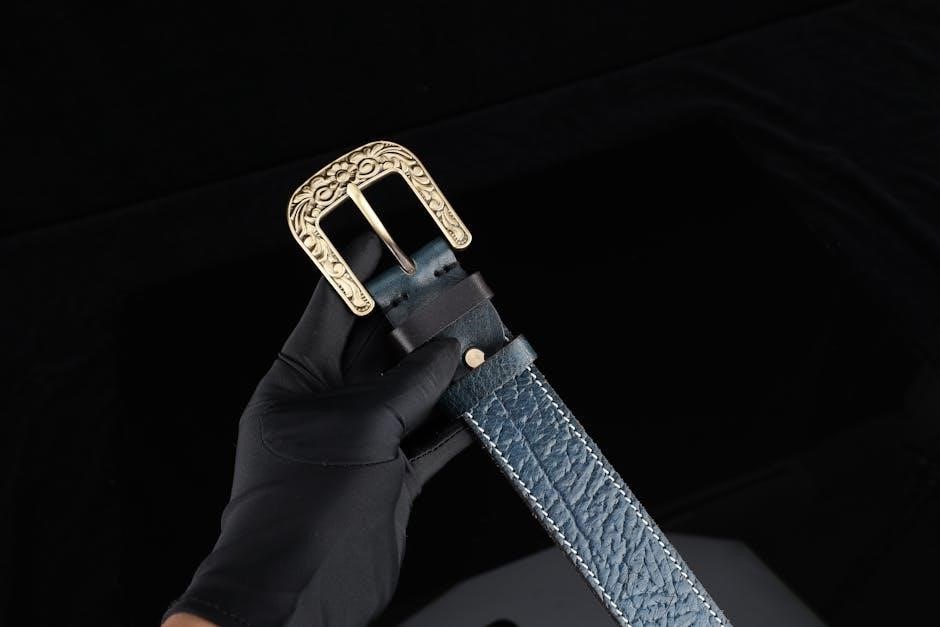
Belt sizing isn’t as straightforward as clothing sizes, often differing from your usual pant waist measurement. Traditionally, belt sizes represent the measurement from the buckle’s prong to the middle hole of the belt. This system assumes a degree of adjustability, allowing for a comfortable and secure fit.
However, variations exist between manufacturers and regions. Understanding these differences is crucial for avoiding frustrating misfits. The core principle revolves around finding a belt that comfortably encircles your natural waist or where you intend to wear the belt – typically at the hips for lower-rise pants.
Factors like belt material and desired tightness also play a role. Leather belts, for instance, will stretch slightly over time, while fabric belts offer less give. A properly sized belt should allow for a snug, yet comfortable, fit without feeling overly constricting or loose. Accurate measurement is the foundation of successful belt selection.
Why Accurate Belt Sizing Matters
Proper belt sizing extends beyond mere aesthetics; it significantly impacts comfort, support, and the longevity of both your clothing and the belt itself. A belt that’s too small can cause discomfort, restrict movement, and potentially damage your pants by straining the waistband. Conversely, a belt that’s too large won’t provide adequate support, leading to slipping and a generally untidy appearance.
Beyond personal comfort, an accurately sized belt contributes to a polished and professional look. It ensures your pants sit correctly, enhancing your overall silhouette. Furthermore, consistently straining a belt beyond its capacity can weaken the leather or fabric, shortening its lifespan.
Investing time in accurate measurement and selecting the right size ultimately saves you money and ensures a consistently well-fitted and functional accessory. It’s a small detail with a surprisingly large impact.
The Difference Between Belt Sizes and Waist Sizes
A common misconception is that belt size directly correlates to waist size; however, this isn’t always the case. Belt sizes typically refer to the length of the belt itself, measured from the buckle’s prong to the hole used, not your actual waist circumference. Generally, belt size is measured in inches, and it’s often 2-4 inches larger than your waist measurement.
This difference accounts for the portion of the belt that needs to wrap around your body and secure through the buckle. Therefore, knowing your waist size is a starting point, but it’s crucial to understand that you’ll need a belt that’s several inches longer.
Always prioritize measuring a well-fitting existing belt or following the detailed measuring instructions to determine the most accurate belt size for optimal comfort and style.
Measuring for a Belt: Step-by-Step Instructions
Accurate measurement is key to a perfect fit! Follow these simple steps to determine your ideal belt size, ensuring both comfort and style with every wear.
Using Your Existing Pants Size as a Starting Point
While not always definitive, your pants size offers a convenient initial estimate for your belt size. Generally, add 2 to 4 inches to your pants waist measurement to arrive at a reasonable belt size. This accounts for the fact that belts are typically worn lower on the waist than pants are fitted.
However, it’s crucial to remember that pants sizes can vary significantly between brands and even styles within the same brand. A size 34 waist in one store might fit differently than a size 34 in another. Therefore, relying solely on your pants size can lead to inaccuracies.
Consider this a preliminary step, a helpful jumping-off point, but always verify with a direct waist measurement using a tape measure for the most precise belt size determination. Don’t assume consistency; always double-check!
Measuring Your Waist Accurately with a Tape Measure
For the most reliable belt size, measure your natural waistline. Stand relaxed, and position the tape measure around your waist, where your pants typically sit – usually slightly below your belly button. Ensure the tape is snug but not constricting; it should lie flat against your skin, not over clothing.
Take a deep breath and exhale normally while taking the measurement. Avoid sucking in your stomach or flexing your muscles, as this will distort the reading. Record the measurement in inches. It’s beneficial to have someone else assist you to ensure accuracy.
Repeat the measurement a couple of times to confirm consistency. If the readings differ, take the average. This waist measurement is the foundation for selecting the correct belt size, offering a far more precise fit than relying on pants sizes alone.
Measuring Your Inseam for Belt Placement
Determining your inseam aids in optimal belt placement, influencing both comfort and style. While not directly used for belt sizing, it helps establish where the buckle should naturally fall. Stand with your feet shoulder-width apart and measure from the top of your waistband (where the belt will sit) down to the desired belt buckle position.
Typically, the buckle should rest comfortably near the middle of your belt loop. This measurement isn’t precise like waist circumference, but it’s a useful guide; Consider your body shape and personal preference; some prefer a higher or lower buckle placement.
Understanding your inseam ensures the belt complements your proportions and avoids awkward bunching or gaping. It’s a subtle detail that contributes significantly to a polished and well-fitted appearance, enhancing overall style and confidence.
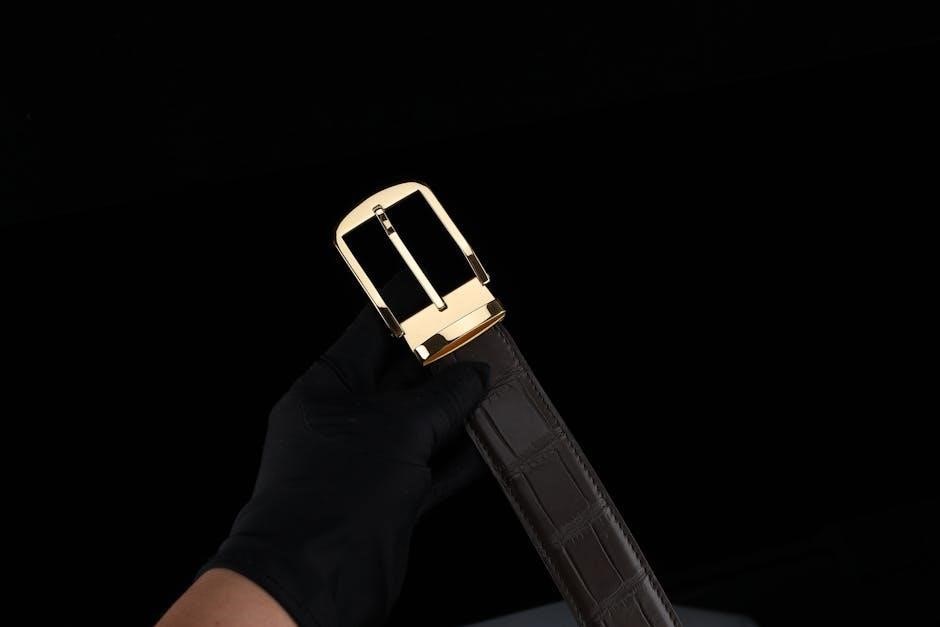
Standard Belt Size Charts: Men
Men’s belt sizing varies across regions; charts detailing US, European, and UK standards are crucial for accurate selection, ensuring a comfortable and secure fit.
US/North American Belt Size Chart for Men
Understanding the US/North American belt size chart is fundamental for a proper fit. Unlike waist measurements, belt sizes are typically indicated in inches. A common misconception is directly correlating pant size to belt size; this isn’t always accurate. Generally, if your waist size is 32 inches, a size 34 belt is a good starting point, adding two inches.
However, individual preferences and how high or low you wear your pants influence the ideal size. Here’s a breakdown:
- Waist 28-30 inches: Belt Size 32
- Waist 30-32 inches: Belt Size 34
- Waist 32-34 inches: Belt Size 36
- Waist 34-36 inches: Belt Size 38
- Waist 36-38 inches: Belt Size 40
- Waist 38-40 inches: Belt Size 42
- Waist 40-42 inches: Belt Size 44
Always prioritize measuring your actual waist for the most precise fit. Remember to account for any layering of clothing when determining your size.
European Belt Size Chart for Men
Navigating European belt sizing requires converting from waist measurements, typically expressed in centimeters; Unlike the US system, European belt sizes often directly correlate to waist circumference. It’s crucial to understand this difference to avoid purchasing an ill-fitting belt. European sizing tends to be more precise, reflecting the actual waist measurement rather than adding inches.
Here’s a general conversion guide:
- Waist 76-81 cm (30-32 inches): Belt Size 85/34
- Waist 81-86 cm (32-34 inches): Belt Size 90/36
- Waist 86-91 cm (34-36 inches): Belt Size 95/38
- Waist 91-96 cm (36-38 inches): Belt Size 100/40
- Waist 96-101 cm (38-40 inches): Belt Size 105/42
The first number represents the belt length in centimeters, while the second is the equivalent US size. Always double-check the specific retailer’s size chart, as variations can occur. Accurate waist measurement is key!
UK Belt Size Chart for Men
Understanding UK belt sizing involves a unique system differing from both US and European standards. Typically, UK belt sizes are indicated in inches, but they represent the waist size the belt is intended to fit, not the belt’s actual length. This can be initially confusing, so careful attention is needed when purchasing.
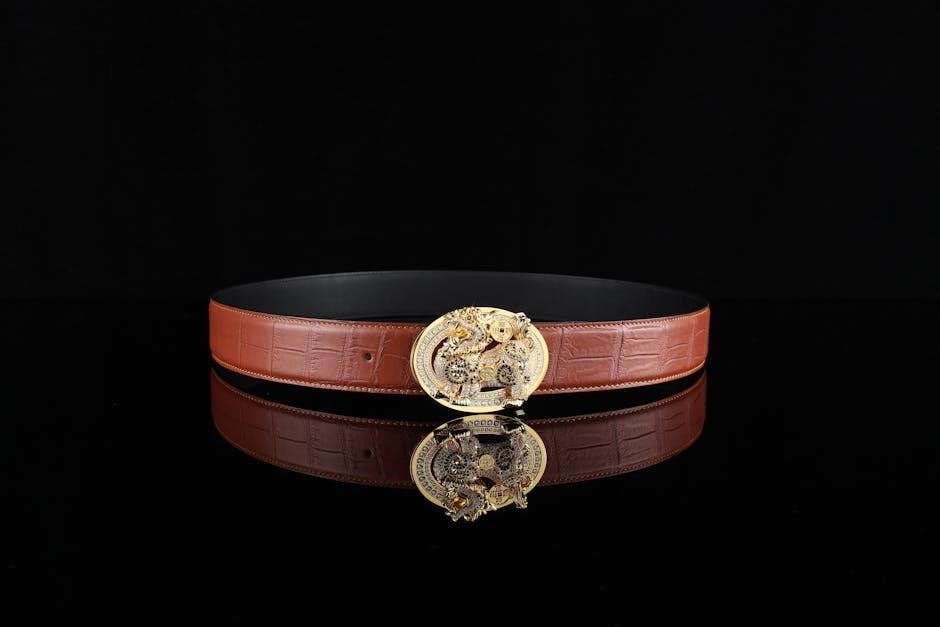
Here’s a common conversion guide:
- Waist 30 inches: Belt Size 30”
- Waist 32 inches: Belt Size 32”
- Waist 34 inches: Belt Size 34”
- Waist 36 inches: Belt Size 36”
- Waist 38 inches: Belt Size 38”
It’s vital to measure your waist accurately before ordering. Unlike some systems, UK sizing generally doesn’t add extra inches to the waist measurement for the belt size; Always consult the retailer’s specific chart, as slight variations can exist. Prioritize accurate measurement for a perfect fit!
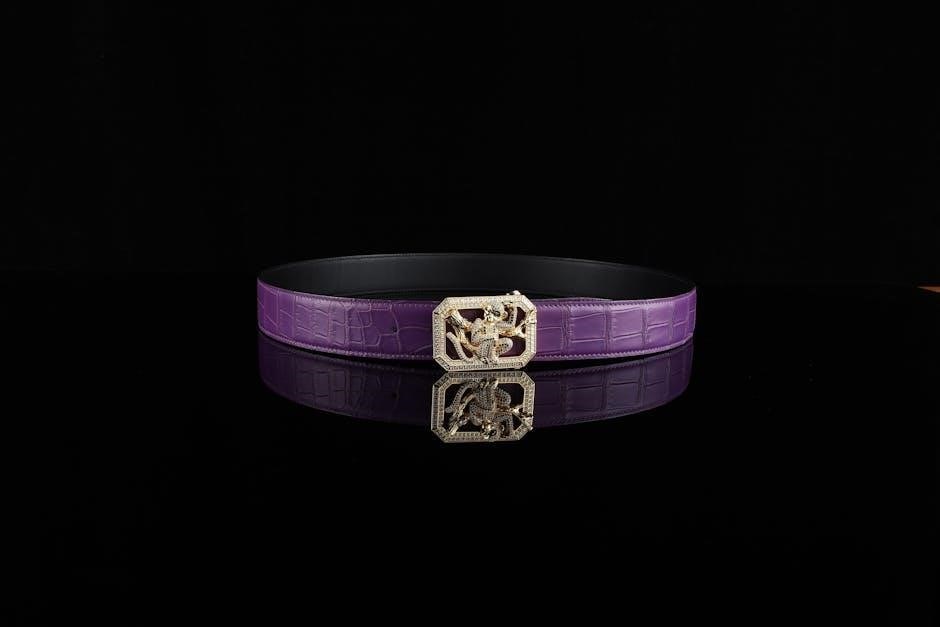
Standard Belt Size Charts: Women
Women’s belt sizing mirrors men’s in using waist measurements, but charts differ slightly. Understanding US, European, and UK standards is crucial for a comfortable, stylish fit.
US/North American Belt Size Chart for Women
Navigating US and North American women’s belt sizes requires understanding the correlation between waist size and belt length. Typically, belt sizes are listed in inches and correspond to a specific waist measurement. For example, a size Small generally fits a waist of 25-27 inches, while a Medium accommodates 28-30 inches.
A size Large usually fits waists ranging from 31-33 inches, and Extra Large is designed for 34-36 inch waists. It’s important to note that these are general guidelines, and variations can occur between brands. Always consult the specific brand’s size chart when possible.
When in doubt, it’s often recommended to size up, as a belt can always be tightened, but cannot be easily lengthened. Accurate measurement is key to achieving a comfortable and flattering fit. Remember to measure your natural waistline, which is usually the narrowest part of your torso.
European Belt Size Chart for Women
Understanding European women’s belt sizing differs from North American standards, utilizing a numerical system often corresponding to centimeters or a combination of centimeters and inches. Sizes typically range from 75cm to 100cm and beyond, representing waist measurements. A size 75cm generally equates to approximately 29.5 inches, while 80cm is around 31.5 inches.
Size 85cm corresponds to roughly 33.5 inches, 90cm to 35.4 inches, and 95cm to 37.4 inches. Larger sizes, such as 100cm and above, cater to wider waistlines. It’s crucial to check the specific brand’s size chart, as variations exist.
European sizing can sometimes be less consistent than US sizing, so precise measurement is vital. Converting your waist measurement from inches to centimeters (multiply by 2.54) can aid in selecting the correct size. Prioritize comfort and a secure fit when choosing your belt.
UK Belt Size Chart for Women
The United Kingdom employs a belt sizing system that blends inches and sometimes numerical representations, often mirroring European standards but with slight variations. UK women’s belt sizes generally start around 28 inches and extend upwards, accommodating a diverse range of waist measurements. A size 28 inches typically fits a 71cm waist, while 30 inches equates to approximately 76cm.
Common sizes include 32, 34, 36, and 38 inches, corresponding roughly to 81cm, 86cm, 91cm, and 96cm respectively. As with other regions, brand-specific charts are essential for accurate sizing. Some retailers may use a numerical system alongside inches, adding a layer of complexity.
Accurate waist measurement is paramount; always measure at your natural waistline. Consider the belt’s intended use – a looser fit for comfort, or a snugger fit for defining the waist. Prioritize a secure and comfortable fit for optimal style and functionality.
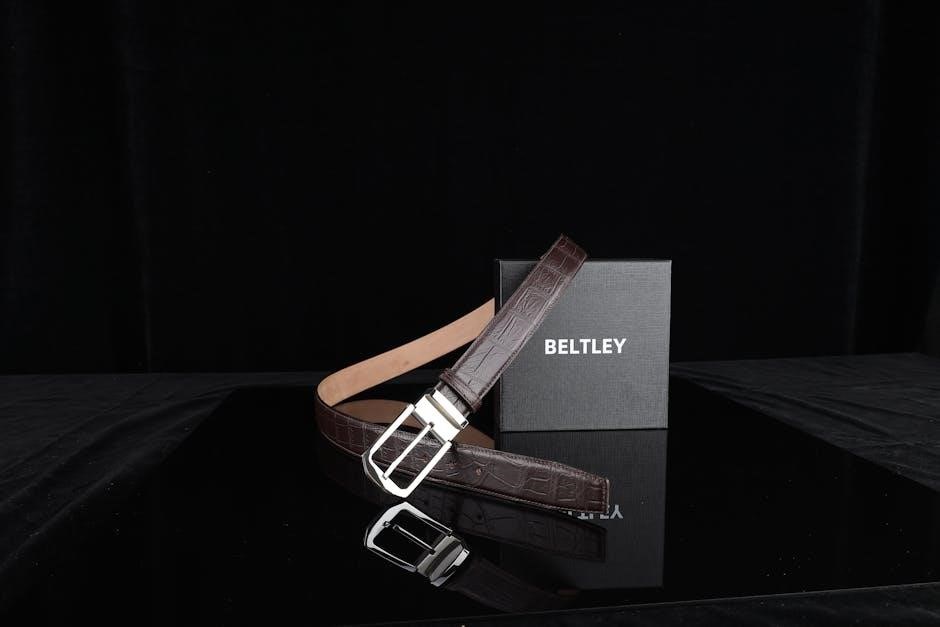
Belt Width Considerations
Belt width significantly impacts aesthetics and functionality; standard widths range from 1.5 to 2 inches, influencing how well a belt complements various pant styles and occasions.
Standard Belt Widths (1.5″, 2″, etc.)
Belt widths are not one-size-fits-all, varying to suit different styles and pant designs. The most common widths include 1.5 inches, often considered a versatile standard suitable for casual and business-casual attire. A 1.25-inch width is frequently seen with women’s belts or more refined, slimmer outfits.
Moving up, 2-inch belts offer a bolder look, traditionally paired with jeans and more rugged pants, projecting a confident and substantial style. Wider belts, exceeding 2 inches, are less common in mainstream fashion but can be found in specialized or fashion-forward contexts.
The choice of width isn’t merely aesthetic; it also impacts how the belt interacts with your pants’ belt loops. Wider belts require appropriately sized loops to maintain proportion and prevent a bulky appearance. Considering these factors ensures a harmonious and well-balanced ensemble.
Choosing the Right Width for Your Pants
Selecting the appropriate belt width hinges on your pants’ style and belt loops. Generally, narrower belt loops necessitate slimmer belts – a 1 to 1.25-inch width works best, preventing a strained or overcrowded look. For standard-sized belt loops (around 1.5 inches), a 1.5-inch belt is the classic, universally flattering choice.
Wider belt loops, often found on jeans or work pants, accommodate belts up to 2 inches or slightly more. Avoid forcing a too-narrow belt through wide loops, as it appears disproportionate. Conversely, a belt that’s too wide can overwhelm the pants.
Consider the overall aesthetic; dress pants typically pair well with slimmer belts, while rugged denim benefits from a bolder, wider option. Maintaining visual balance is key to a polished and refined appearance.
Belt Width and Formal vs. Casual Wear
Belt width significantly impacts the formality of an outfit. For formal occasions – think business suits or elegant evening wear – a refined, understated look is paramount. Opt for a slim belt, typically between 0.75 and 1 inch in width. These narrower belts complement tailored trousers without drawing excessive attention.
Conversely, casual settings offer greater flexibility. Wider belts, ranging from 1.5 to 2 inches, are perfectly acceptable and often enhance the relaxed vibe of jeans, chinos, or shorts. A substantial belt can serve as a stylish statement piece, adding personality to your ensemble.
Remember that consistency is crucial; match the belt’s formality to the overall outfit. A wide, rugged belt with a suit would appear jarring, while a very thin belt with workwear might look insignificant.
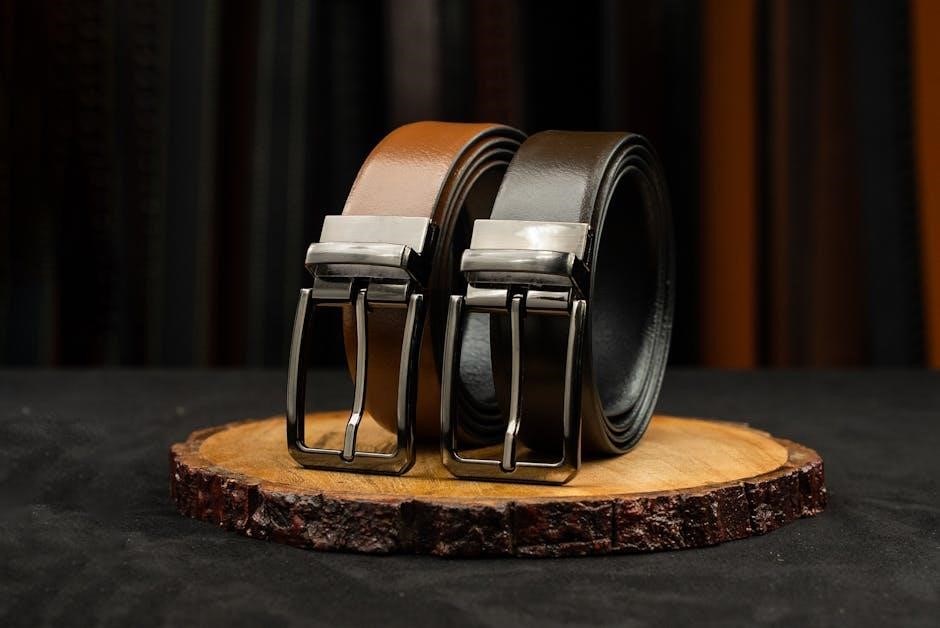
Belt Material and Sizing Adjustments
Different materials behave uniquely; leather stretches, fabric offers elasticity, and synthetics maintain consistency. Account for these properties when selecting your ideal belt size.
Leather Belts: Stretch and Break-In Period
Leather belts, renowned for their durability and style, require a unique approach to sizing due to their natural properties. Unlike synthetic materials, leather will stretch and mold to your body over time, creating a more comfortable and personalized fit.
When initially purchasing a leather belt, it’s generally recommended to order a size up from your typical waist measurement, anticipating this stretch. The amount of stretch varies depending on the leather’s quality and thickness – full-grain leather tends to stretch more than top-grain.
The “break-in” period is crucial. Expect the belt to feel slightly snug at first; consistent wear will gradually soften the leather and allow it to conform to your shape. Avoid over-tightening the belt during this phase to prevent excessive stretching and potential damage. Proper conditioning can also aid in maintaining the leather’s suppleness and extending its lifespan, influencing how it stretches and adapts to your body.
Fabric Belts: Sizing and Elasticity
Fabric belts offer a distinct sizing consideration compared to leather, primarily due to their inherent elasticity. The woven construction of fabric belts allows for a degree of give and flexibility, accommodating slight fluctuations in waist size and providing enhanced comfort;
When selecting a fabric belt, it’s often advisable to choose a size closer to your actual waist measurement, as the material will naturally stretch during wear. However, the amount of elasticity varies significantly based on the fabric type – cotton blends typically offer less stretch than those incorporating spandex or elastic fibers.
Consider the intended use; for casual wear, a slightly snug fit is acceptable, allowing the belt to maintain its shape. For more structured outfits, prioritize a comfortable fit that doesn’t constrict movement. Regularly check the belt’s elasticity, as prolonged stretching can eventually lead to a loss of shape and effectiveness.
Synthetic Belts: Durability and Size Consistency
Synthetic belts, often crafted from materials like polyurethane or nylon, present a unique combination of durability and predictable sizing. Unlike leather which changes with wear, or fabric which stretches, synthetics maintain their shape and dimensions remarkably well over time, offering consistent support.
This consistency simplifies sizing; generally, you can rely on your standard belt size when purchasing a synthetic option. However, it’s crucial to check the manufacturer’s size chart, as variations can occur. Synthetic belts are known for resisting cracking, fading, and water damage, making them a practical choice for everyday wear.
While highly durable, synthetic belts lack the natural breathability of leather. Consider this if you live in a warm climate or anticipate prolonged wear. Their resilience makes them ideal for active lifestyles and situations demanding a reliable, long-lasting accessory.
Troubleshooting Belt Size Issues
Addressing fit problems is key to belt satisfaction; common issues include tightness or looseness, often stemming from inaccurate measurements or material stretch over extended use.
Belt Too Tight: What to Do
Encountering a belt that feels uncomfortably snug requires immediate attention to prevent damage to both the belt and your clothing. First, avoid forcing the buckle; excessive strain can lead to breakage or stretching of the leather, potentially ruining the belt’s shape and functionality.
If the belt is new, consider whether it needs a break-in period, particularly with genuine leather. Wearing it for shorter durations initially can help it conform to your waist. However, if the tightness persists, explore options for extending the belt’s length. Some belts have additional holes that can be utilized.
If no extra holes exist, a leather punch tool can carefully create new ones, but proceed with caution to avoid damaging the material. For belts without adjustable holes, professional alterations by a cobbler or tailor are recommended. Finally, if the belt remains too tight after these attempts, it’s likely the incorrect size and should be exchanged for a larger one.
Belt Too Loose: Solutions and Adjustments
A belt that doesn’t fit snugly can be both aesthetically unpleasing and functionally ineffective. The primary solution is to tighten the belt using the existing holes; ensure the buckle is securely fastened. If the belt remains loose even on the tightest setting, several adjustments can be made.
For belts with a traditional buckle, adding new holes is a viable option. Utilize a leather punch, carefully selecting a location that maintains the belt’s structural integrity. Alternatively, consider a belt with a different buckle type – a ratchet belt, for instance, offers micro-adjustments for a precise fit.
If the looseness stems from belt stretch over time, especially with leather, a professional cobbler can often restitch the belt tighter. As a last resort, if adjustments prove insufficient, exchanging the belt for a smaller size is the most effective solution, guaranteeing a secure and stylish fit;
Understanding Belt Stretch Over Time
Belts, particularly those crafted from natural materials like leather, are prone to stretching with consistent wear. This phenomenon isn’t necessarily a defect, but rather a characteristic of the material conforming to the wearer’s body and the stresses of daily use. The extent of stretch varies based on leather quality, belt construction, and frequency of wear.
Initially, a new leather belt might feel snug, but it will gradually loosen as the fibers relax and mold to your waist. Regular stretching can necessitate tightening the belt to maintain a secure fit, or even adding new holes. Fabric and synthetic belts exhibit less stretch, offering greater size consistency over time.
Monitoring your belt’s fit and proactively adjusting it or considering replacement when significant stretch occurs ensures continued comfort and a polished appearance. Proper care, like conditioning leather, can mitigate excessive stretching.
Specialty Belt Sizing
Unique body types and styles demand specialized belt sizing considerations; this section addresses big & tall, children’s, and military-style belt fit nuances.
Big and Tall Belt Sizes
Finding belts that comfortably and securely fit larger frames requires attention to detail. Standard belt sizes often fall short for individuals with bigger builds, necessitating extended lengths and widths. When selecting a belt, prioritize measuring your actual waist size, as pants sizes can be inconsistent.
Look for belts specifically designed for “big and tall” men, typically ranging from sizes 44 inches and up, sometimes extending to 60 inches or beyond. These belts are constructed with longer straps and more robust buckles to accommodate larger waistlines.
Width is also crucial; wider belts (1.5 to 2 inches) often provide better support and a more proportional look for larger physiques. Ensure the belt’s material is durable enough to withstand the added stress. Consider leather or reinforced synthetic materials. Don’t hesitate to size up if you’re between sizes, allowing for a comfortable and secure fit.
Children’s Belt Sizing
Accurately sizing belts for children presents unique challenges due to their rapid growth. Unlike adult sizing, children’s belt sizes often correlate directly with pant sizes rather than waist measurements. However, it’s still best practice to measure their waist for a more precise fit, accounting for clothing layers.
Children’s belts typically range from sizes 4 to 16, corresponding roughly to pant waist sizes. Look for adjustable belts to accommodate growth spurts, offering flexibility and longevity. Buckles should be simple to operate for young children, prioritizing safety and ease of use.
Material choice is important; durable yet comfortable materials like canvas or soft leather are ideal. Avoid belts with small, detachable parts that could pose a choking hazard. Regularly check the fit, as a belt that’s too loose can be unsafe, and one that’s too tight can be uncomfortable.
Military-Style Belt Sizing
Military-style belts, often referred to as web belts, differ significantly from standard belts in both sizing and construction. These belts typically utilize a two-piece system: a belt canvas and a separate buckle. Sizing focuses on the belt canvas length, measured from the fold to the tip, rather than waist size.
Common sizes range from 36 inches to 48 inches or longer, accommodating various waist sizes when paired with the appropriate buckle. Buckles are often adjustable, allowing for fine-tuning of the fit. It’s crucial to select a canvas length that, when combined with the buckle, provides sufficient overlap for secure fastening.
Consider the type of buckle; some require threading the canvas through multiple loops, impacting the overall length needed. Military belts prioritize durability and security, so a snug, reliable fit is paramount. Always verify compatibility between the canvas and buckle before purchase.